Grant Guides
ECO4 Scheme Explained: Eligibility, Grants and How to Apply
The ECO4 scheme funds free or subsidized insulation, heating, and ventilation upgrades for eligible Bristol households. Find out if you qualify and how to apply.
- ECO4 runs from April 2022 to March 2026 (extended to 2030 in some proposals)
- Around £1 billion per year in funding from energy suppliers
- Free or subsidized insulation, heating, and ventilation measures
- Eligibility based on benefits, income, and EPC rating
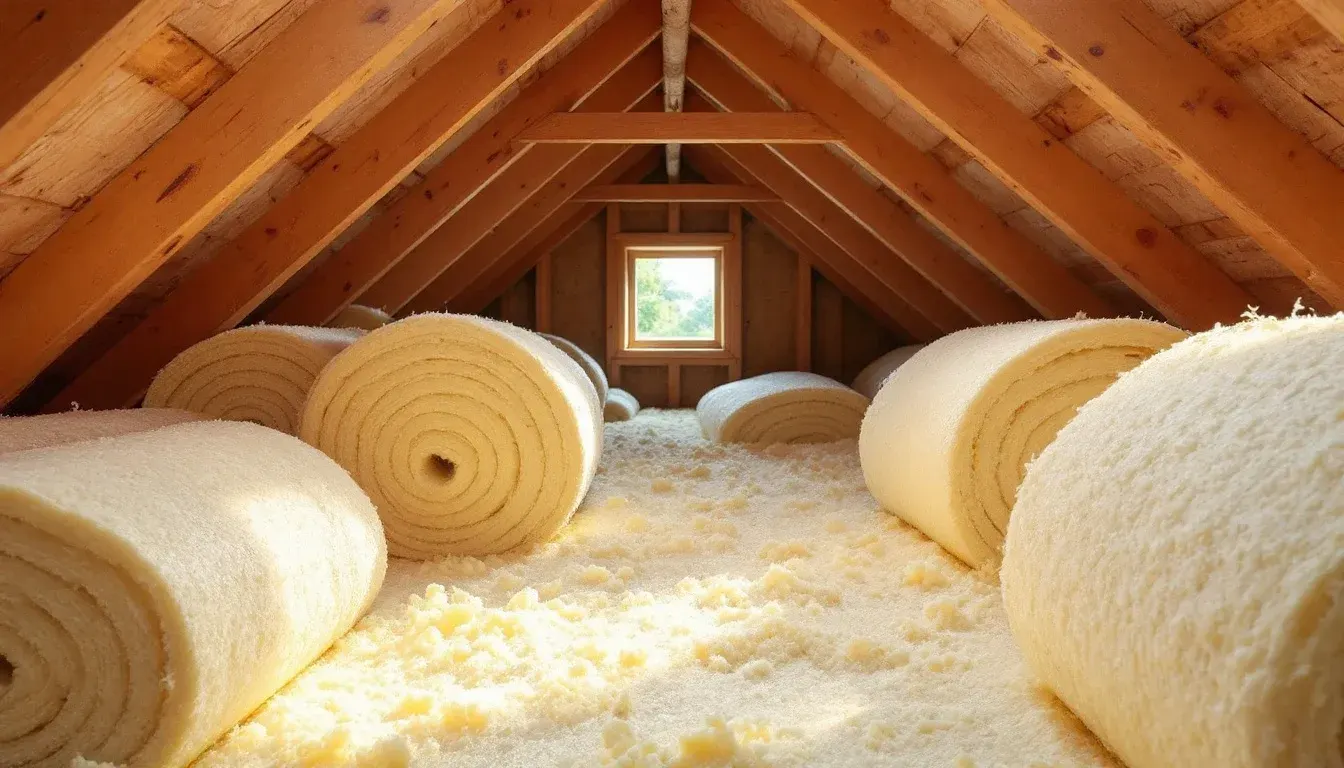
Loft insulation is one of the most common measures funded under ECO4, usually topped up to 270mm.
Contents
- Scheme dates
- April 2022 to March 2026 (extension to 2030 proposed).
- Annual funding
- Around £1 billion per year from obligated energy suppliers.
- Income threshold (Route 2, low income + EPC D-G)
- £31,000 gross household income.
- Bristol households in fuel poverty
- 13.5%, around 26,000 households.
- Boiler Upgrade Scheme top-up grant
- £7,500 for air source heat pumps.
What is the ECO4 scheme?
The Energy Company Obligation (ECO4) is a UK government scheme that requires larger energy suppliers to fund energy efficiency improvements in low-income, fuel-poor, and vulnerable households. The scheme launched in April 2022 and is currently scheduled to run until March 2026, though extensions to 2030 have been proposed (DESNZ ECO4 Guidance, updated March 20261).
ECO4 has a budget of around £1 billion per year, funded by obligated energy suppliers (those with more than 150,000 domestic customer accounts). Suppliers meet their obligation by funding energy efficiency measures installed in eligible households, either directly or through partnerships with installers and local authorities.
Unlike previous ECO schemes, ECO4 takes a "whole-house" approach. This means the aim is to improve a property to an EPC rating of C or above, or to achieve the maximum practicable improvement within ECO4 cost caps. Single measures (such as loft insulation alone) are only funded if the property is already close to an EPC C rating or if no further cost-effective measures are available.
ECO4 is delivered by energy suppliers and their partners, not by local councils or the government directly. You do not apply for ECO4 through a government portal; instead, you work with an energy supplier or ECO4 installer who checks your eligibility and arranges the work.
Who is eligible for ECO4 in Bristol?
ECO4 eligibility is based on a combination of household income, benefit receipt, property type, and energy performance. There are two main eligibility routes:
Route 1: Means-tested benefits (LA Flex)
You are likely eligible if you or someone in your household receives one of the following benefits (DESNZ ECO4 Guidance, Annex B1):
- Universal Credit (with household income under £31,000 per year)
- Pension Credit (Guarantee Credit or Savings Credit)
- Income-based Jobseeker's Allowance (JSA)
- Income-related Employment and Support Allowance (ESA)
- Income Support
- Working Tax Credit or Child Tax Credit (with household income under £31,000 per year)
- Child Benefit (with household income under £31,000 per year)
- Housing Benefit
The £31,000 threshold applies to gross household income and is set by the government. Energy suppliers may verify income through DWP data sharing or by requesting evidence such as payslips or tax returns.
Route 2: Low-income and EPC D-G (Income Flex)
If you do not receive any of the benefits above, you may still qualify if:
- Your gross household income is below £31,000 per year, and
- Your property has an EPC rating of D, E, F, or G
This route is sometimes called "Income Flex" or "Broader Group" eligibility. Your local authority (Bristol City Council) may also refer households under this route if you are considered vulnerable to the effects of living in a cold home (for example, if you have a long-term health condition, young children, or are over 65).
Property eligibility
Your property must be:
- Privately owned (owner-occupied) or privately rented
- Located in England, Scotland, or Wales (Northern Ireland has a separate scheme)
- Your main residence
Social housing (council or housing association properties) is not eligible for ECO4, as social landlords have separate obligations to improve the energy efficiency of their stock.
ECO4 eligibility in Bristol: local context
Around 13.5% of Bristol households (approximately 26,000 households) are estimated to be in fuel poverty, defined as having above-average energy costs and below-average income after housing costs (DESNZ Sub-regional Fuel Poverty Data 20242).
Bristol has a higher proportion of private rented homes (around 28%) than the England average (20%), and around 19% of Bristol homes have an EPC rating of E, F, or G (ONS EPC data, 20253). This means a significant number of Bristol households may qualify for ECO4, particularly in areas with older housing stock such as Easton, Lawrence Hill, and Hartcliffe.
Bristol City Council works with energy suppliers and installers to identify eligible households and deliver ECO4 funding under the LA Flex scheme. If you think you may be eligible, contact the council's energy advice team or use the Simple Energy Advice service (see below).
What home improvements does ECO4 cover?
ECO4 funds a range of insulation, heating, and ventilation measures designed to improve energy efficiency and reduce heating costs. The specific measures available to your household depend on your property type, current EPC rating, and what is technically feasible.
Insulation measures
- Loft insulation: Top-up or first-time loft insulation to 270mm thickness (around £300-£600 retail cost, free under ECO4)
- Cavity wall insulation: Injecting insulation into the cavity between external and internal walls (around £500-£1,200 retail cost, free under ECO4)
- Solid wall insulation: Internal or external insulation for properties without a cavity (around £8,000-£15,000 retail cost, free or heavily subsidized under ECO4)
- Room-in-roof insulation: Insulation for converted loft spaces (around £1,000-£2,500 retail cost, free under ECO4)
- Underfloor insulation: Insulation for suspended timber floors (around £800-£2,000 retail cost, free under ECO4)
- Flat roof insulation: Insulation for flat or low-pitch roofs (around £1,500-£4,000 retail cost, free under ECO4)
Heating measures
- Air source heat pumps: Low-carbon heating system replacing gas or oil boilers (around £10,000-£14,000 retail cost, heavily subsidized under ECO4; may also qualify for the Boiler Upgrade Scheme4 for additional grant funding)
- First-time central heating: Installation of central heating in properties with no existing system (around £4,000-£7,000 retail cost, free under ECO4)
- Storage heaters: Replacement of old storage heaters with modern high-efficiency models in properties without gas central heating (around £300-£600 per heater retail cost, free under ECO4)
- Boiler replacements: In some cases, ECO4 can fund a new boiler if the existing boiler is broken and unrepairable (subject to restrictions; ECO4 prioritizes low-carbon heating over fossil fuel boilers)
Ventilation measures
ECO4 can also fund ventilation improvements if they are necessary to prevent condensation, dampness, or mold following insulation work. This includes mechanical extraction ventilation (MEV) systems or positive input ventilation (PIV) systems.
What ECO4 does not cover
ECO4 does not fund:
- Solar panels (these are not covered by ECO4, though you may be eligible for 0% VAT and the Smart Export Guarantee; see our solar panels guide)
- Windows and doors (unless they are required as part of solid wall insulation work)
- Cosmetic improvements or repairs unrelated to energy efficiency
- Boiler servicing or minor repairs (unless the boiler is beyond economic repair)
How to apply for ECO4 in Bristol
ECO4 is not a direct government grant you apply for. Instead, you contact an obligated energy supplier or an ECO4 installer who checks your eligibility and arranges the work. Here is the typical process:
Step 1: Check your eligibility
Before contacting an installer, check whether you are likely to qualify. Use the Simple Energy Advice service5 (run by the Energy Saving Trust on behalf of the UK government) to:
- Check your current EPC rating
- Get an initial eligibility check for ECO4
- Find ECO4 installers and energy suppliers operating in your area
You can also contact Bristol City Council's energy advice team for guidance on ECO4 and other energy efficiency schemes. See the council's energy advice page6 for contact details.
Step 2: Contact an ECO4 installer or energy supplier
Once you have checked your eligibility, contact an ECO4 installer or your energy supplier. Many large suppliers (such as British Gas, E.ON, EDF, Octopus Energy, OVO Energy, and Scottish Power) deliver ECO4 schemes directly or through partners.
The installer or supplier will:
- Verify your eligibility by checking benefit records or requesting evidence of income
- Arrange a home survey to assess what measures are suitable for your property
- Provide a quote and confirm what ECO4 will cover (the work should be free or heavily subsidized; if you are asked to pay a large contribution, check whether you are genuinely eligible and whether the installer is reputable)
Step 3: Home survey and quote
A qualified assessor will visit your home to:
- Check your current EPC rating (or produce a new EPC if your property does not have one)
- Identify which energy efficiency measures are suitable and cost-effective
- Confirm whether the proposed measures will improve your EPC to band C or achieve the maximum improvement within ECO4 cost caps
The assessor will produce a Technical Monitoring Report (TMR) that specifies the work to be done. This must be lodged with Ofgem (the scheme regulator) before work begins.
Step 4: Installation
Once the TMR is approved, the installer will schedule the work. Installation times vary depending on the measures being installed:
- Loft or cavity wall insulation: 1 day
- Solid wall insulation: 1-2 weeks (external) or 1-3 weeks (internal)
- Air source heat pump: 2-3 days
- First-time central heating: 1-2 weeks
All ECO4 work must be carried out by TrustMark-registered installers and meet PAS 2030 and PAS 2035 standards. These are quality and consumer protection standards that ensure work is carried out correctly and safely (TrustMark website7).
Step 5: Post-installation EPC and guarantee
After the work is complete, a new EPC will be produced to confirm the improvement. You should receive:
- A guarantee for the work (typically 2 years for insulation, 5-10 years for heating systems, backed by the installer and their insurance)
- Instructions on how to use and maintain any new heating systems
- A copy of the new EPC
If you have any issues with the work, contact the installer first. If you cannot resolve the issue, you can complain to Ofgem or use the TrustMark Dispute Resolution Service.
ECO4 vs GBIS: what's the difference?
ECO4 and the Great British Insulation Scheme (GBIS) are both government-backed energy efficiency schemes, but they have different eligibility criteria and coverage:
| Feature | ECO4 | GBIS |
|---|---|---|
| Eligibility | Means-tested benefits or low income (under £31,000) + EPC D-G | Council tax bands A-D (England) or equivalent in other UK nations |
| Measures covered | Insulation, heating, ventilation (whole-house approach) | Insulation only (loft, cavity wall, solid wall, underfloor) |
| Cost to household | Free or heavily subsidized | Free or subsidized (some measures may require a contribution) |
| Tenure | Private (owned or rented) only | Private (owned or rented) only |
| Scheme end date | March 2026 (proposed extension to 2030) | March 2026 (launched September 2023) |
In general, if you are on a low income or receive means-tested benefits, ECO4 is likely the better option because it covers heating as well as insulation. If you do not qualify for ECO4 but live in a council tax band A-D property, check whether you are eligible for GBIS.
Some households may be eligible for both schemes, though you cannot receive funding from both for the same measure. Your installer or energy supplier will advise which scheme is best for your circumstances.
For more on GBIS, see our GBIS guide.
Additional funding for Bristol households
In addition to ECO4 and GBIS, Bristol households may be eligible for other energy efficiency funding:
West of England Combined Authority (WECA) schemes
WECA occasionally funds retrofit schemes across Bristol, Bath and North East Somerset, North Somerset, and South Gloucestershire. These have included grants for heat pumps, insulation, and solar panels. Check the WECA website8 for current schemes.
Boiler Upgrade Scheme (BUS)
The Boiler Upgrade Scheme provides £7,500 grants for air source heat pumps and £5,000 for biomass boilers (as of May 2026). BUS is available to most homeowners and is not means-tested, though you must meet minimum property insulation standards (gov.uk BUS page4).
If you are eligible for ECO4 and want an air source heat pump, your installer may combine ECO4 funding with a BUS grant to cover the full cost of the heat pump and associated insulation work.
Warm Home Discount
The Warm Home Discount is a £150 annual rebate on your electricity bill if you receive Pension Credit or are on a low income and receive means-tested benefits. It does not fund home improvements, but it can help reduce energy bills while you wait for ECO4 work to be completed (gov.uk Warm Home Discount page9).
Frequently asked questions
What is the ECO4 scheme?
The Energy Company Obligation (ECO4) is a UK government scheme that requires larger energy suppliers to fund energy efficiency improvements in low-income and vulnerable households. The scheme runs from April 2022 to March 2026 and has a budget of around £1 billion per year. ECO4 funds insulation, heating, and ventilation measures with the aim of improving homes to an EPC rating of C or achieving the maximum practicable improvement.
Who is eligible for ECO4 in Bristol?
You may be eligible if you receive certain means-tested benefits (such as Universal Credit, Pension Credit, or Child Benefit with household income under £31,000) or if your household income is below £31,000 and your home has an EPC rating of D, E, F, or G. Your property must be privately owned or privately rented (social housing is not eligible). Use the eligibility checker on this page or contact an ECO4 installer to check your eligibility.
What home improvements does ECO4 cover?
ECO4 can fund insulation (loft, cavity wall, solid wall, room-in-roof, underfloor, flat roof), heating upgrades (air source heat pumps, first-time central heating, storage heater replacements, boiler replacements in some cases), and ventilation improvements (MEV, PIV). ECO4 does not cover solar panels, windows and doors (unless required for solid wall insulation), or cosmetic improvements unrelated to energy efficiency.
How do I apply for ECO4 in Bristol?
You do not apply directly to the government. Contact an obligated energy supplier or an installer working with ECO4 funding. They will check your eligibility, arrange a home survey, and carry out the work at no cost or subsidized cost if you qualify. You can also use the Simple Energy Advice service at simpleenergyadvice.org.uk5 to find local ECO4 providers, or contact Bristol City Council's energy advice team for guidance.
What is the difference between ECO4 and GBIS?
ECO4 is targeted at low-income and vulnerable households (based on benefits or income under £31,000 plus EPC D-G) and covers insulation, heating, and ventilation. GBIS (Great British Insulation Scheme) is available to households in council tax bands A-D and covers insulation only. ECO4 takes a whole-house approach and can fund more expensive measures like heat pumps and solid wall insulation, while GBIS focuses on simpler insulation measures. Some households may be eligible for both, though you cannot receive funding from both for the same measure.
Is there a cost to the homeowner for ECO4 work?
For most eligible households, ECO4 work is free. In some cases, particularly for more expensive measures like solid wall insulation or air source heat pumps, you may be asked to make a contribution if the cost exceeds ECO4 caps. However, any contribution should be affordable and significantly lower than the retail cost of the work. If an installer quotes a large upfront cost, check whether you are genuinely eligible and whether the installer is reputable.
Can landlords apply for ECO4 on behalf of tenants?
Yes. Private landlords can apply for ECO4 funding to improve energy efficiency in rented properties, provided the tenant meets the eligibility criteria. The tenant must consent to the work, and the landlord cannot charge the tenant for the improvements or increase rent as a direct result of the ECO4 work.
Sources
- GOV.UK. www.gov.uk/government/publications/energy-company-obligation-eco4-g... (accessed 3 July 2026)
- GOV.UK. www.gov.uk/government/statistics/sub-regional-fuel-poverty-data-2024 (accessed 3 July 2026)
- GOV.UK. www.ons.gov.uk/peoplepopulationandcommunity/housing/datasets/energy... (accessed 3 July 2026)
- GOV.UK. www.gov.uk/apply-boiler-upgrade-scheme (accessed 3 July 2026)
- Simpleenergyadvice. www.simpleenergyadvice.org.uk/ (accessed 3 July 2026)
- Bristol City Council. www.bristol.gov.uk/residents/housing/housing-energy-advice (accessed 3 July 2026)
- Trustmark. www.trustmark.org.uk/ (accessed 3 July 2026)
- West of England Combined Authority. www.westofengland-ca.gov.uk/ (accessed 3 July 2026)
- GOV.UK. www.gov.uk/the-warm-home-discount-scheme (accessed 3 July 2026)